July Fly of the Month
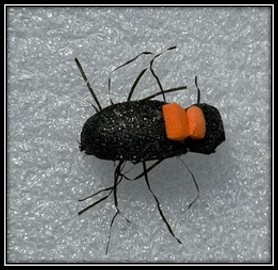
EZ Beetle
Dean Wellman, BRSC Financial Secretary – Brule, WI
Here’s a “guide’s choice” fly that is fast and easy to tie. Foam flies are fun to fish as their buoyancy makes surface fishing simple. Apple’s Siri says that there are over 400,000 different beetle species in the world. So, this is great fly to introduce beginners to fly fishing because it’s also effective. Sizes 8 and 10 are probably the most popular. Open cell foam works well for the body as it is more buoyant than closed cell and easier to work with. A small piece of brightly colored foam can be used as a “sighter” so that the fly can be more easily seen in the early morning or late evening. Ants, beetles, and hoppers are good choices in late summer when the other hatches have slowed and the fish might be interested in a bigger dinner.
Recipe
- Hook: Size 10 Gamakatsu S10-B. I like a black finish on the hook for this fly. I believe it might look like legs.
- Thread: Black UTC 140 denier (great for foam). Attach the thread behind the hook eye and overwrap the hook slightly into the bend. This helps make a nice body when the foam is pulled forward. Then, wrap the thread forward to a couple hook-eye lengths behind the eye.
- Body: Black open cell 3mm thick foam. Cut a strip a little wider than 1/4 inch that is as long as the foam sheet. A metal ruler and utility blade work well for the cut. Use the strip for multiple flies. Cover the thread wraps on top with super glue. Place the tip of the foam on top of the hook with the foam extending rearward. Catch 1/16-inch of the foam with a slightly firm wrap and then a few successively tighter wraps until you have formed a small head. Next, make 4 equally spaced spiral wraps towards the rear of the hook. Start with slight pressure, increasing to a very firm wrap for the last one. This makes a nice segmented body with the thread now just past the bend of the hook.
- Legs: Black Ice Straggle chenille. Tie in a 3-inch piece at the next to last body segment, advance the thread to the head, wrap the ice straggle forward in between the remaining segments to the head and tie off. Remove excess. Pick out the ice straggle with a bodkin. Pull the Ice Straggle fibers to the sides from the top.
- Foam shell: Position the thread about 2 hook eyes from the eye. Tightly pull the foam at the tail of the fly forward to the hook eye. Secure the foam with several wraps, increasing the pressure as you go. Trim off the foam, leaving about 1/16- inch past the hook eye. Make a 2 or 3 turn whip finish. To increase the visibility of the fly, use a 1/8-inch-wide piece of 1mm orange (or whatever color you prefer) as a “sighter.” Secure it with 2 firm wraps and then another 2 or 3 turn whip finish. Trim off the orange foam.
This fly takes about 2 or 3 minutes after you get the hang of it. You can substitute small round black rubber legs doubled up between a couple of the segments instead of the Ice Straggle. Then, a foam beetle becomes a foam spider. Just don’t leave these around the house if someone is an arachnophobe!